

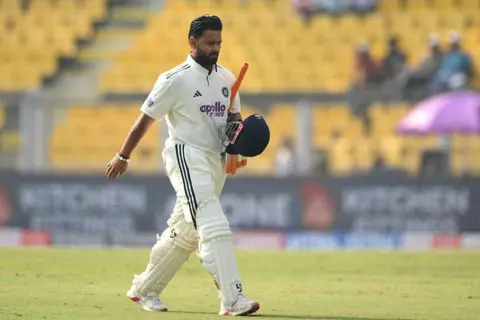
India's unexpected 0-2 loss to South Africa in the just finished red-ball series has plunged the side into crisis.
In the final match, South Africa gave India their heaviest Test defeat by runs, defying expectations. It was the Proteas' maiden series victory in the subcontinent in a quarter-century and the host nation's another home failure in just a year after a 12-year unbeaten run.
The positive trajectory gained during the past six months has all but vanished and the careers of several players - as well as team coach Gautam Gambhir - are now uncertain.
Early Optimism Fades Quickly
The emerging side's strong showing in the UK this season, under a fresh leadership, indicated a seamless changeover post the almost concurrent retirements of key players R Ashwin, Sharma, and Kohli.
A straightforward 2-0 victory over West Indies at the beginning of the home campaign enhanced that perception, till the Proteas came and inflicted a devastating defeat.
The home side were a tad unfortunate that captain Gill suffered an injury very early in the initial match and took no further part in the contest. But that does not excuse or justify the side of the highly disappointing showing in the two games against South Africa.
Several established players suffered, and several players eyeing long red-ball careers were shown as not yet good enough - in skill or mindset - for the format.
Worrying Trend
It was the second whitewash at home experienced by India in just more than a year. In 2024, underestimated the Kiwis had achieved a remarkable 3-0 win which effectively cost the hosts a berth in the World Test Championship (WTC) final.
The latest loss to South Africa threatens to derail the team's chances of reaching the showpiece of this season too.
Previously ranked third in the Test championship standings ahead of the matches, the side have fallen to the fifth spot. Although nine more Tests are yet to be played, a majority are against the Aussies. Typically, competing on home turf would be a major plus - including against the mighty Aussies. But the failures against New Zealand and the Proteas leave little scope for such assurance.
Roots of the Decline
The national team's vulnerability in Test cricket has been significantly highlighted. Nevertheless, why India have performed so poorly in Test matches on home soil in recent times is still bewildering.
Since the turn of the century, the Indian cricket team were considered invincible in Test cricket in home conditions. In hot, humid conditions and on surfaces that favored spin bowling and benefited their players, the hosts brooked no opposition. The odd series defeat, like in 2012-13 against the English, was viewed as an exception.
Now, the team seem vulnerable on home turf.
Against the Kiwis in last year and the Proteas this year, India were hoisted by their own petard. The pitches they developed to favor their game backfired spectacularly, as opponents capitalized on them more skillfully, surpassing the Indian batters and bowlers when it counted the most.
What's Gone Wrong?
Certain analysts propose that the Indian team is floundering at home because home surfaces have been modified from turners to fast tracks to get cricketers ready to do well overseas.
Others highlight that the Indian Premier League (IPL), in which numerous foreign cricketers take part, has removed the unfamiliarity and challenge subcontinental pitches would challenge them with earlier.
Although there is validity in each argument, it still does not explain why the side's results on home soil have experienced such a dramatic drop.

Several Weaknesses
Many past stars diagnose a complex, multi-headed problem, not just a couple of reasons.
Experts and participants have identified multiple deficiencies following India's humiliating loss to the South Africans: underrating the rivals, inadequate readiness, questionable picks, overconfidence, frequent changes of the playing XI, and emphasizing white-ball over red-ball cricket.
This was clear in the performances of the side.
Cricketers such as Pant and Jaiswal, of whom great things were anticipated, paid for their carelessness, while Sai Sudarshan, Reddy, and Dhruv Jurel - who were hoping to secure their spot in the side - fell short in ability and attitude, paying a heavy price for their nonchalant approach.
Only a handful - Ravindra Jadeja, Jasprit Bumrah, Kuldeep, Mohammed Siraj and Washington Sundar - did justice to their ability and standing - but not well enough to win matches.
Leadership Under Fire
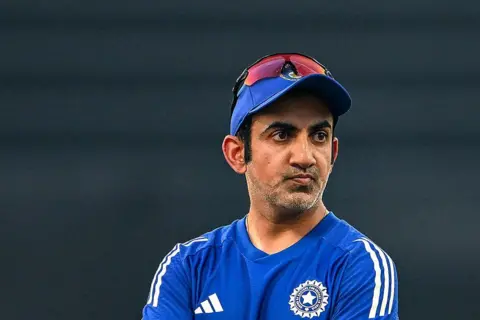
The review also included just the players - the selection panel and backroom team were also criticized, driven by distraught fans and critical former players. At the centre of the criticism was mentor Gambhir.
At his post-series press
